
-- By Rollo Scott
Late last year, we reported on how the closure of the Plum Creek mill in Ronan continued to impact the local economy and the mill's former workers. Rollo Scott sat down with one of the workers laid off by the mill closure and what he is doing to support his family and change his career.
Showing posts with label tractor country. Show all posts
Showing posts with label tractor country. Show all posts
Monday, January 25, 2010

Monday, December 28, 2009
Ronan Vets Skeptical of Obama's Commitment in Afghanistan
-- By Carly Flandro
At the VFW in Ronan, Mont., old veterans sit at tables and sip their coffee. An American flag leans against the wall behind them, a symbol of what they've dedicated their lives to. They are talking and visiting, like they do almost every morning.
This morning, though, they are talking about Obama.
The president recently announced he would send 30,000 more troops to Afghanistan, a plan that has not been strongly supported throughout the country. Ronan, however, sits in one of two community types that Patchwork Nation found were split over the troop increase.
Although "Tractor Country" polls show that as many people support an increase in troops as a decrease, here among Ronan's military members and veterans the overwhelming majority of voices are strongly opposed to Obama's decision.
But unlike some opposition based on increased troop levels, these vets say it is his intention to withdraw troops by July 2011 that prompts their disapproval. To them, the so-called "exit strategy" indicates that the president is not dedicated to winning the war.
"If you're going to commit people, to expose themselves to die, you ought to try to win and go home," says Ken Wersland, who was in the military for 26 years.
As an Air Force bombardier, Wersland spent time in Japan, Vietnam, Germany, Turkey and Spain. Those years, Wersland says, changed his perspective about his country.
After being in the military, he's become more politically conservative. Wersland is skeptical of Obama, but says his plan could be worthwhile if it helps Afghanistan to form a stronger infrastructure and provide better education for its citizens. Regardless of what happens, Wersland says it's a soldier's job to obey, not question decisions.
"No matter your rank, you have the last two words in every decision: yes sir or yes ma'am. And that's the way it is," he says. "If anybody thinks other than that, they cannot be successful in the military."
Dan Hall, another Vietnam veteran, pulls up a chair next to Wersland. Hall fought on the ground, which Wersland says is very different from fighting in the air.
"Air war is quiet and impersonal," Wersland says. "You can inflict damage (with a bomb) but you can't hear it go boom or smell it. You're not down there worrying about leeches on your legs or mines in the ground."
Those mines have lingered in Hall's memory, especially the one that detonated when a fellow soldier stepped on it. The explosion propelled Hall up and backwards into the air, leaving him with two to three feet of scars and permanent hearing loss.
Hall has experienced the gravity of war, and he says that the 30,000 new troops being sent to Afghanistan should go with the intention of winning -- that way, the traumas they'll endure will have had a purpose.
"If they go over there, get involved and pull out, it'll be a lot of deaths for nothing," he says.
The physical tolls of war are often tragic, but so are the mental tolls, says Bert Todd, a Korean veteran. The suicide rate among service personnel is the highest it's ever been, he says. People are being deployed multiple times, and some have been sent to war five different times.
Todd's son, Kyle, is in Iraq on his second deployment.
"His mother has nightmares," Todd says.
Todd, too, thinks about what could happen to his son. He could come back with serious physical or mental problems, or worse -- he could not come back at all.
"But," Todd says, "there's nothing I can do about it."
The conversation lightens quickly as Hall talks about drinking dirty water from streams when he was in Vietnam, and Todd takes the excuse to laugh, to think about something else.
At her house, Charleen Crenshaw thumbs through a photo album, looking at pictures of her son. He's in the military, and there are pictures of him in uniform, and others of his wife and children.
Crenshaw, who wears a t-shirt that says "freedom isn't free," is one of four people in her family who are in the military or have been at some time. She's a human resources specialist, and went to Kuwait in 2006.
Crenshaw says she will always obey her commander in chief, but she's concerned about the decisions Obama has made.
"Obama's never even been in the military," she says. "It doesn't seem like he has as good of a grasp on what's going on as he should."
Crenshaw says the extra troops could be beneficial, though, because they'll supplement the soldiers who are already there and hopefully prevent some deaths by creating a stronger force.
But she also knows how those soldiers' absences from home will make a difference. When her son is gone, it's one less place at the dinner table. When her husband is gone, there is less help with the kids. And when she's gone, it means someone else will have to cook and clean.
"When a soldier deploys, it's not just him," Crenshaw says. "His family deploys with him, and so does his community."
In Ronan, Mont., the military members and veterans know the importance of obeying the commander in chief. But they also know that 30,000 is not just a number -- it is people, families and communities. If all that is going to be further ricked in Afghanistan, they say, they should go until they win.
At the VFW in Ronan, Mont., old veterans sit at tables and sip their coffee. An American flag leans against the wall behind them, a symbol of what they've dedicated their lives to. They are talking and visiting, like they do almost every morning.
This morning, though, they are talking about Obama.
The president recently announced he would send 30,000 more troops to Afghanistan, a plan that has not been strongly supported throughout the country. Ronan, however, sits in one of two community types that Patchwork Nation found were split over the troop increase.
Although "Tractor Country" polls show that as many people support an increase in troops as a decrease, here among Ronan's military members and veterans the overwhelming majority of voices are strongly opposed to Obama's decision.
But unlike some opposition based on increased troop levels, these vets say it is his intention to withdraw troops by July 2011 that prompts their disapproval. To them, the so-called "exit strategy" indicates that the president is not dedicated to winning the war.
"If you're going to commit people, to expose themselves to die, you ought to try to win and go home," says Ken Wersland, who was in the military for 26 years.
As an Air Force bombardier, Wersland spent time in Japan, Vietnam, Germany, Turkey and Spain. Those years, Wersland says, changed his perspective about his country.
After being in the military, he's become more politically conservative. Wersland is skeptical of Obama, but says his plan could be worthwhile if it helps Afghanistan to form a stronger infrastructure and provide better education for its citizens. Regardless of what happens, Wersland says it's a soldier's job to obey, not question decisions.
"No matter your rank, you have the last two words in every decision: yes sir or yes ma'am. And that's the way it is," he says. "If anybody thinks other than that, they cannot be successful in the military."
Dan Hall, another Vietnam veteran, pulls up a chair next to Wersland. Hall fought on the ground, which Wersland says is very different from fighting in the air.
"Air war is quiet and impersonal," Wersland says. "You can inflict damage (with a bomb) but you can't hear it go boom or smell it. You're not down there worrying about leeches on your legs or mines in the ground."
Those mines have lingered in Hall's memory, especially the one that detonated when a fellow soldier stepped on it. The explosion propelled Hall up and backwards into the air, leaving him with two to three feet of scars and permanent hearing loss.
Hall has experienced the gravity of war, and he says that the 30,000 new troops being sent to Afghanistan should go with the intention of winning -- that way, the traumas they'll endure will have had a purpose.
"If they go over there, get involved and pull out, it'll be a lot of deaths for nothing," he says.
The physical tolls of war are often tragic, but so are the mental tolls, says Bert Todd, a Korean veteran. The suicide rate among service personnel is the highest it's ever been, he says. People are being deployed multiple times, and some have been sent to war five different times.
Todd's son, Kyle, is in Iraq on his second deployment.
"His mother has nightmares," Todd says.
Todd, too, thinks about what could happen to his son. He could come back with serious physical or mental problems, or worse -- he could not come back at all.
"But," Todd says, "there's nothing I can do about it."
The conversation lightens quickly as Hall talks about drinking dirty water from streams when he was in Vietnam, and Todd takes the excuse to laugh, to think about something else.
At her house, Charleen Crenshaw thumbs through a photo album, looking at pictures of her son. He's in the military, and there are pictures of him in uniform, and others of his wife and children.
Crenshaw, who wears a t-shirt that says "freedom isn't free," is one of four people in her family who are in the military or have been at some time. She's a human resources specialist, and went to Kuwait in 2006.
Crenshaw says she will always obey her commander in chief, but she's concerned about the decisions Obama has made.
"Obama's never even been in the military," she says. "It doesn't seem like he has as good of a grasp on what's going on as he should."
Crenshaw says the extra troops could be beneficial, though, because they'll supplement the soldiers who are already there and hopefully prevent some deaths by creating a stronger force.
But she also knows how those soldiers' absences from home will make a difference. When her son is gone, it's one less place at the dinner table. When her husband is gone, there is less help with the kids. And when she's gone, it means someone else will have to cook and clean.
"When a soldier deploys, it's not just him," Crenshaw says. "His family deploys with him, and so does his community."
In Ronan, Mont., the military members and veterans know the importance of obeying the commander in chief. But they also know that 30,000 is not just a number -- it is people, families and communities. If all that is going to be further ricked in Afghanistan, they say, they should go until they win.
Monday, November 30, 2009
Months Later, Mill's Closure Weighs on Ronan and Its Workers
-- By Carly Flandro; Photos by Rollo Scott
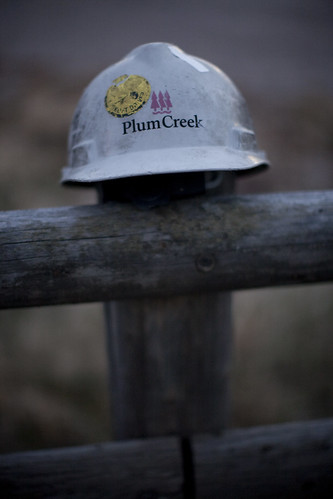 When the Plum Creek lumber mill closed, the workers hung up their white hard hats for the last time. But they didn’t hang them in their lockers as they had for years. They put them outside on the fence posts that circled the mill, where people could see them.
The mill closed four months ago, but dozens of the hard hats still sit atop the wooden fence. They are dirty and scratched, and the Plum Creek logo has worn away on most. On one, the name “Rick” is written in faded red marker. Many are plastered in safety stickers, some dating back to a decade ago.
It’s quiet, empty of the logs and people that once crowded its vast lots. Now, only puddles and unused buildings remain.
Partly due to competition from Canadian lumber mills, the Pablo, Mont., mill closed after being in business for more than four decades. Approximately 80 people were laid off, forcing some to walk away from the only job they had ever had.
However, because foreign imports played a role in the mill’s closure, the workers are eligible for up to three years of free schooling under the government’s Trade Adjustment Assistance program – an opportunity many are seizing.
Ellen Kaphammer, who worked at the mill for 21 years, says losing her job was almost like a blessing in disguise. It allowed her to go to nursing school, something she always wanted to do. Kaphammer, 54, has never been to college, so it’ll take her four years to become a registered nurse – she and her husband will pay for the last year.
“I always try to make the best out of every situation,” she says.
It’s a Saturday afternoon, and Kaphammer has just gotten home from a care clinic in Ronan, where she works as a nursing assistant. She’s still wearing her work clothes – tightly laced tennis shoes and blue flowery scrubs.
Kaphammer, who’s taking classes from Salish Kootenai College, would like to find a job close to Ronan when she’s done with school so she and her husband Karl don’t have to move. Whatever job she finds, though, she knows she won’t make as much money or receive as many benefits as she did before. The jobs at the mill were the best in the valley, and everybody knew it.
She still remembers the day she found out the mill would close.
“The bosses called a mandatory meeting, which is never good,” she says.
It was the end of April, months after other lumber mills in the area had closed and the Pablo mill workers thought they were safe. So when managers announced their mill would close, not just temporarily, but forever, the workers were shocked.
“You could’ve heard a pin drop,” says Kayo Reynolds, a former electrician at the mill, describing the moment managers announced the closure.
He remembers the two months after that, as he and his co-workers tried to motivate themselves, knowing that their work would soon be meaningless.
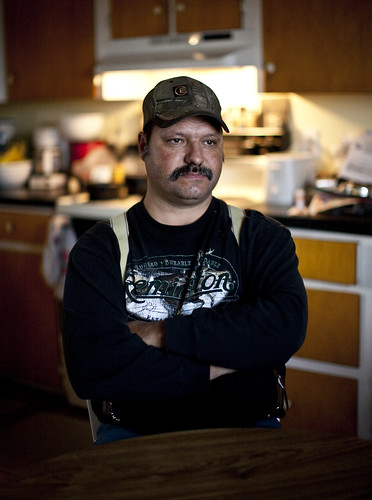 “That was the toughest 60 days of my life,” he said. “We took a lot of pride in what we did.”
Unlike Kaphammer, Kayo, 47, is still charting his post-Plum Creek life. He plans on taking online classes in the spring, but he’s not sure yet what he’ll study. In the meantime, he’ll just try to stay busy.
The Reynolds live in a white farmhouse outside of town, where cattails are their closest neighbors. Behind the house is a new shed that Kayo built, and freshly chopped firewood is piled on the back stoop.
Inside, Kayo’s wife Yvette stirs their supper on the stovetop. Kayo sits at the kitchen table, talking about the remodeling he’s been doing. He’s re-wired and re-plumbed the whole house, and has a list of projects he hasn’t started.
Their kitchen window frames a landscape they see every day. The sun shines through gaps in the clouds, illuminating the dark blue of the Mission mountains. Round bales of hay are stacked in the foreground and a single horse stands nearby.
Along with the beauty salon that Yvette owns, the Reynolds have a ranch with 25 cows and 20 horses. They wanted to live on a ranch because they thought it would be the best way to raise their kids. Their two sons now work as hired hands in central Montana.
“They won’t get rich, but they’ll have a good lifestyle,” Yvette says.
And it's that lifestyle he worries he may lose because of the mill's closing. Kayo says he may have to move to a larger city to find work, but he’ll do all he can to avoid that. And while he’s without a job, he thinks they’ll be okay, as long as Yvette keeps cutting hair and he can sell a cow or two.
“We’re just gonna try to hold ‘er together and see what happens,” he said.
Kayo isn’t so much worried about himself as he is about some of his co-workers, especially the younger ones. They’re the ones that needed their jobs the most, the ones who still have mortgages to pay and kids to feed.
Then there are the older workers who were laid off soon before they would have retired. Now they must decide if they will retire early or learn new skills for a job they’d only have for a few years.
In more rural parts of the country, the economic recession that has driven unemployment into double digits has not hit as hard. But that is cold comfort for Lake County, Mont. where the unemployment rate has climbed from 5.5 percent in April of 2008 to 8.3 percent in September of this year. And in these smaller communities, a closure like Plum Creek ripples throughout the area.
The mill used to pay $300,000 a month for the electric bill, money that will now be lost. The schools and the state will also lose the tax money the mill brought in. Some people will inevitably have to move from Ronan to find jobs, or travel a good distance to work.
There’s still gossip around town that somebody’s going to buy the mill and start it up again, but that possibility seems more like a desperate hope than a likelihood.
Most have turned their hopes to school, but even so, they wonder if a degree will be of any help in getting them a job. Until then, they’ll live off the half-paychecks that unemployment brings them, studying, searching for jobs, and biding time.
And every now and then, when they drive from Ronan to Pablo, they’ll pass by the old mill and marvel at how still it is.
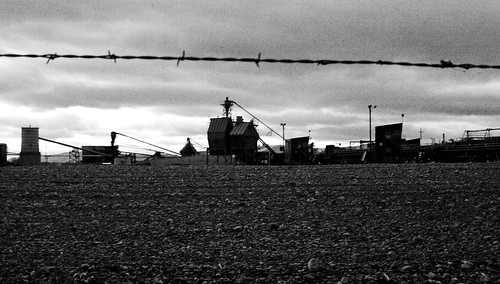 Kayo used to drive by and see lights out and know he’d have to go make them work again. The mill is almost completely dark now, and when Kayo drives by, he knows he can’t fix it.
The mill’s mint green and faded white buildings stand alone on empty dirt fields. There are no bustling people, no logs and no jobs.
All that’s left is a row of abandoned white hard hats.
When the Plum Creek lumber mill closed, the workers hung up their white hard hats for the last time. But they didn’t hang them in their lockers as they had for years. They put them outside on the fence posts that circled the mill, where people could see them. The mill closed four months ago, but dozens of the hard hats still sit atop the wooden fence. They are dirty and scratched, and the Plum Creek logo has worn away on most. On one, the name “Rick” is written in faded red marker. Many are plastered in safety stickers, some dating back to a decade ago.
It’s quiet, empty of the logs and people that once crowded its vast lots. Now, only puddles and unused buildings remain.
Partly due to competition from Canadian lumber mills, the Pablo, Mont., mill closed after being in business for more than four decades. Approximately 80 people were laid off, forcing some to walk away from the only job they had ever had.
However, because foreign imports played a role in the mill’s closure, the workers are eligible for up to three years of free schooling under the government’s Trade Adjustment Assistance program – an opportunity many are seizing.
Ellen Kaphammer, who worked at the mill for 21 years, says losing her job was almost like a blessing in disguise. It allowed her to go to nursing school, something she always wanted to do. Kaphammer, 54, has never been to college, so it’ll take her four years to become a registered nurse – she and her husband will pay for the last year.
“I always try to make the best out of every situation,” she says.
It’s a Saturday afternoon, and Kaphammer has just gotten home from a care clinic in Ronan, where she works as a nursing assistant. She’s still wearing her work clothes – tightly laced tennis shoes and blue flowery scrubs.
Kaphammer, who’s taking classes from Salish Kootenai College, would like to find a job close to Ronan when she’s done with school so she and her husband Karl don’t have to move. Whatever job she finds, though, she knows she won’t make as much money or receive as many benefits as she did before. The jobs at the mill were the best in the valley, and everybody knew it.
She still remembers the day she found out the mill would close.
“The bosses called a mandatory meeting, which is never good,” she says.
It was the end of April, months after other lumber mills in the area had closed and the Pablo mill workers thought they were safe. So when managers announced their mill would close, not just temporarily, but forever, the workers were shocked.
“You could’ve heard a pin drop,” says Kayo Reynolds, a former electrician at the mill, describing the moment managers announced the closure.
He remembers the two months after that, as he and his co-workers tried to motivate themselves, knowing that their work would soon be meaningless.
“That was the toughest 60 days of my life,” he said. “We took a lot of pride in what we did.”Unlike Kaphammer, Kayo, 47, is still charting his post-Plum Creek life. He plans on taking online classes in the spring, but he’s not sure yet what he’ll study. In the meantime, he’ll just try to stay busy.
The Reynolds live in a white farmhouse outside of town, where cattails are their closest neighbors. Behind the house is a new shed that Kayo built, and freshly chopped firewood is piled on the back stoop.
Inside, Kayo’s wife Yvette stirs their supper on the stovetop. Kayo sits at the kitchen table, talking about the remodeling he’s been doing. He’s re-wired and re-plumbed the whole house, and has a list of projects he hasn’t started.
Their kitchen window frames a landscape they see every day. The sun shines through gaps in the clouds, illuminating the dark blue of the Mission mountains. Round bales of hay are stacked in the foreground and a single horse stands nearby.
Along with the beauty salon that Yvette owns, the Reynolds have a ranch with 25 cows and 20 horses. They wanted to live on a ranch because they thought it would be the best way to raise their kids. Their two sons now work as hired hands in central Montana.
“They won’t get rich, but they’ll have a good lifestyle,” Yvette says.
And it's that lifestyle he worries he may lose because of the mill's closing. Kayo says he may have to move to a larger city to find work, but he’ll do all he can to avoid that. And while he’s without a job, he thinks they’ll be okay, as long as Yvette keeps cutting hair and he can sell a cow or two.
“We’re just gonna try to hold ‘er together and see what happens,” he said.
Kayo isn’t so much worried about himself as he is about some of his co-workers, especially the younger ones. They’re the ones that needed their jobs the most, the ones who still have mortgages to pay and kids to feed.
Then there are the older workers who were laid off soon before they would have retired. Now they must decide if they will retire early or learn new skills for a job they’d only have for a few years.
In more rural parts of the country, the economic recession that has driven unemployment into double digits has not hit as hard. But that is cold comfort for Lake County, Mont. where the unemployment rate has climbed from 5.5 percent in April of 2008 to 8.3 percent in September of this year. And in these smaller communities, a closure like Plum Creek ripples throughout the area.
The mill used to pay $300,000 a month for the electric bill, money that will now be lost. The schools and the state will also lose the tax money the mill brought in. Some people will inevitably have to move from Ronan to find jobs, or travel a good distance to work.
There’s still gossip around town that somebody’s going to buy the mill and start it up again, but that possibility seems more like a desperate hope than a likelihood.
Most have turned their hopes to school, but even so, they wonder if a degree will be of any help in getting them a job. Until then, they’ll live off the half-paychecks that unemployment brings them, studying, searching for jobs, and biding time.
And every now and then, when they drive from Ronan to Pablo, they’ll pass by the old mill and marvel at how still it is.
Kayo used to drive by and see lights out and know he’d have to go make them work again. The mill is almost completely dark now, and when Kayo drives by, he knows he can’t fix it. The mill’s mint green and faded white buildings stand alone on empty dirt fields. There are no bustling people, no logs and no jobs.
All that’s left is a row of abandoned white hard hats.
Subscribe to:
Posts (Atom)

 Mostly rural and remote smaller towns with older populations


 Posts
Posts

